
Skin aging is the cumulative result of intrinsic factors (genetics, hormonal changes) and extrinsic factors (UV exposure, diet, stress, sleep). The good news: research consistently shows that extrinsic factors are responsible for the majority of visible aging, meaning lifestyle and skincare choices have a profound impact on how your skin ages.
This guide covers the most evidence-backed natural anti-aging strategies, organized by decade of life and category of intervention.
Collagen, the structural protein that gives skin its firmness, begins declining at approximately 1% per year from age 25. Research in Dermato-Endocrinology (2012) established that this decline accelerates dramatically after menopause (up to 30% loss in the first 5 years). However, the same research confirmed that UV protection, adequate antioxidant nutrition, and topical retinoids can significantly slow collagen degradation at any age.
A study in Annals of Dermatology (2009) found that daily oral aloe vera supplementation over 90 days increased type I procollagen content and matrix metalloproteinase activity, resulting in measurably reduced wrinkle depth and improved skin elasticity in women aged 45+.
In Your 20s: Prevention is Everything
In Your 30s: Add Actives
In Your 40s and 50s: Deep Repair
At what age should I start anti-aging skin care?
Prevention is most effective when started early. SPF and antioxidant protection from your 20s provides measurably better outcomes than starting corrective treatments in your 40s or 50s.
Does aloe vera help with wrinkles?
Yes, research supports both topical and internal use. Topically, acemannan improves skin moisture and elasticity. Internally, aloe vera supplementation has been shown to increase collagen production in women over 45. Skin hydration with aloe vera (Forever Living Kozmetika).
Is natural skin care as effective as cosmetic procedures?
For prevention: absolutely. For significant correction of advanced signs of aging, medical procedures (laser, fillers, prescription retinoids) produce faster results. A consistent natural routine can delay the need for procedures by a decade or more.
For those looking for a science-backed topical routine, Forever Living’s infinite by Forever line is built around stabilized aloe vera and peptide technology, the two ingredients with the strongest evidence base for skin aging reviewed above.
The infinite Restoring Crème combines aloe vera with antioxidant vitamins C and E plus moisturizing compounds to support skin barrier repair and reduce the appearance of fine lines. Its formulation targets the epidermal layer where most visible aging occurs. Alongside it, the infinite Firming Serum uses a peptide-based formula to support skin elasticity and firmness, a combination that mirrors the multi-layer approach recommended in dermatological literature for visible skin improvement.
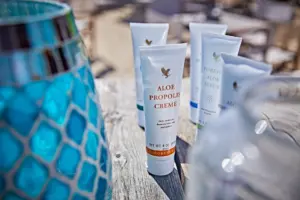
For sensitive or dry skin that needs daily repair, Aloe Propolis Creme provides deeper hydration with bee propolis to support the skin barrier, particularly useful at night when the skin’s natural repair processes are most active.
* These statements have not been evaluated by the Food and Drug Administration. This product is not intended to diagnose, treat, cure, or prevent any disease.
Join as a Forever Preferred Customer — completely free, no obligations. Get 5% off immediately, and up to 30% off all future orders after your first qualifying purchase.

Sign up our newsletter to get update information, news and free insight.