Disclosure: Use Forever Living is an independent affiliate, not the manufacturer. Links to Forever Living’s official US store on this page are affiliate links, and I may earn a commission if you order through them. Orders are placed and paid for on Forever Living’s checkout. About the author
Searches for “omega-3 and exercise recovery” usually expect a verdict on whether a fish oil capsule speeds up recovery. This page does not make that claim, and neither does Forever for its omega-3 product. What it does cover: what omega-3 fatty acids are, where they come from in food, how to compare supplement labels, and what Forever Arctic Sea states on its US product page.
What omega-3 fatty acids are
The NIH Office of Dietary Supplements (ODS) names three main omega-3 fatty acids: ALA, EPA and DHA. ALA is found mainly in plant oils such as flaxseed, soybean and canola oils. EPA and DHA are found in fish and other seafood. ALA is an essential fatty acid, meaning the body cannot make it. The body converts only very small amounts of ALA into EPA and DHA, so food, and supplements if you take them, are the practical sources of EPA and DHA. Forever makes the same point about omega-3s in its product description.
Food sources and how much you need
- Fish and seafood — especially cold-water fatty fish such as salmon, mackerel, tuna, herring and sardines.
- Nuts and seeds — flaxseed, chia seeds and walnuts.
- Plant oils — flaxseed, soybean and canola oils.
- Fortified foods — certain brands of eggs, yogurt, juices and milk.
ODS says experts have not established recommended amounts for omega-3s except ALA: 1.6 g a day for men and 1.1 g for women, and that most people in the United States get enough ALA from food. Recommended amounts of EPA and DHA have not been established.
Omega-3 and exercise: what to expect from a label
Training recovery depends mostly on things that are not supplements: enough protein, enough total food, fluids, and sleep. Omega-3 supplements sit on the margins of that list. Forever’s description of Arctic Sea says it supports a healthy heart and optimal cognition. It does not say the product shortens recovery after exercise, so this site does not either.
| Recovery basics | Where to read more on this site |
|---|---|
| Protein around training | Protein options for beginners |
| Fluids and electrolytes | Electrolytes and hydration during exercise |
| Joint and muscle support supplement | Forever Move |
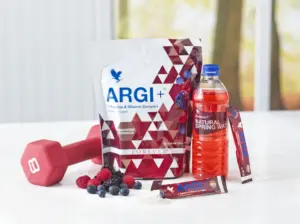
| Performance-focused drink mix | Forever ARGI+ |
How to compare omega-3 supplements
- EPA and DHA amounts — look at these two numbers, not at “fish oil 1,000 mg”.
- Serving size — one product may define a serving as one softgel and another as two or six.
- Servings per bottle — multiply the daily directions by the count to get days per bottle.
- Source and allergens — fish oil products contain fish; softgels made with gelatin are not vegetarian.
Forever Arctic Sea, as the label states it
- Oils — natural fish oil and calamari oil, plus olive oil; fish named as cod, salmon, anchovy and sardine.
- Directions — 2 softgels with meals three times daily, which is 6 softgels a day.
- Supply — 120 softgels, which is 20 days at the directed amount.
- Allergens — contains fish; gelatin softgel.
The full breakdown is in the Forever Arctic Sea guide, and the product is on its product page.
Safety, according to ODS
- Upper amount — the FDA recommends no more than 5 g a day of EPA and DHA combined from dietary supplements.
- Side effects — usually mild: an unpleasant taste, bad breath, heartburn, nausea, stomach discomfort, diarrhea, headache or smelly sweat.
- Medications — high doses of omega-3s may cause bleeding problems with warfarin or other anticoagulant medicines.
Talk to a doctor before starting omega-3 supplements if you take prescription medication, have a fish or shellfish allergy, are pregnant or nursing, or have a medical condition. A supplement is not a substitute for medical advice.
Frequently asked questions
Should I take omega-3 before or after a workout?
Forever’s directions tie Arctic Sea to meals, not to workouts: 2 softgels with meals three times daily.
Can I get omega-3 without fish?
Plant foods supply ALA, a different omega-3. Arctic Sea is made from fish and calamari oils, so it is not a plant-based product.
Who makes Arctic Sea?
Forever Living Products. See What Is Forever Living Products? For other supplements, see the supplements guide.
Sources: NIH Office of Dietary Supplements, Omega-3 Fatty Acids: Fact Sheet for Consumers; Forever Living US product page.
* These statements have not been evaluated by the Food and Drug Administration. This product is not intended to diagnose, treat, cure, or prevent any disease.
View the product: Forever Arctic Sea