

The relationship between stress and immune function is one of the most well-established connections in psychoneuroimmunology, the scientific field that studies how mental state affects biological immunity. Chronic psychological stress does not just make you feel worse; it measurably compromises your body’s ability to fight infection, regulate inflammation, and recover from illness.
The good news: the stress-immunity cycle is breakable. This guide explains the mechanism and provides evidence-based strategies that work.
Acute stress (short-term, like a near-miss accident) actually briefly enhances immune function, an evolutionary adaptation. The problem is chronic stress, which floods the body with cortisol over extended periods. Research in Nature Reviews Immunology (2004) by Segerstrom and Miller, analyzing 293 studies, established that chronic stress consistently suppresses both innate immunity (first-line defense) and adaptive immunity (targeted antibody responses).
Specifically, cortisol:
Chronic stress also directly damages the gut microbiome, reducing diversity and increasing intestinal permeability (“leaky gut”), which in turn generates systemic inflammation that further stresses the immune system. This bidirectional gut-brain-immune axis means that gut health interventions like probiotic supplementation and aloe vera gel can also reduce the physiological impact of stress. Read our probiotics and gut health guide. How aloe vera supports the gut microbiome (Aloe Zdravlje).
Can I boost my immune system while stressed?
Yes, but you need to address both the cause (stress reduction strategies) and the effect (immune support). Nutrition, sleep, and supplements help protect immunity even when stress cannot be immediately eliminated.
How quickly does stress reduction improve immune function?
Studies show measurable improvements in immune markers within 4-6 weeks of consistent stress-reduction practice. Some markers (like salivary IgA) begin improving within days of reduced stress.
Do anti-stress supplements actually work?
Adaptogens (ashwagandha, Rhodiola, bee propolis) have peer-reviewed evidence for reducing cortisol and supporting immune balance. They are most effective as part of a broader stress management strategy.
When chronic stress is a factor, two supplements stand out based on their ingredient profiles and the research behind them:
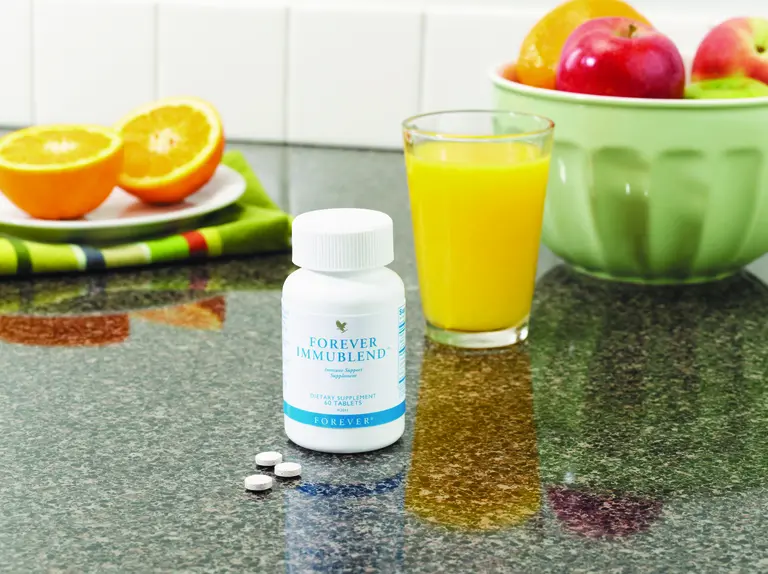
Forever ImmuBlend combines lactoferrin, shiitake mushroom extract, maitake mushroom extract, and zinc into a single daily capsule. Lactoferrin, found naturally in breast milk, is a multifunctional protein with documented immune-modulating properties: a 2016 review in Biochemistry and Cell Biology highlighted its role in both innate and adaptive immunity. The mushroom extracts provide beta-glucans, which prime immune cells without overstimulating them, making this a useful option during periods of high stress when immune modulation (rather than simple “boosting”) is the goal.
Forever Bee Propolis adds a complementary layer of antioxidant and antimicrobial support. Propolis is rich in flavonoids that have been studied for their ability to reduce oxidative stress, a key driver of the cortisol-inflammation cycle described above. It works well alongside ImmuBlend as part of a broader immune-support protocol during high-stress periods.
The link between stress and immune function is a well-documented physiological cascade with real consequences, not just a theoretical one. Sustained cortisol exposure suppresses T-cell activity, disrupts gut microbiome balance, and creates low-grade systemic inflammation that takes time to resolve. The good news is that the same interventions that lower cortisol also protect immune function: sleep, movement, adapted nutrition, and targeted supplementation.
If you’re dealing with a period of sustained stress, think of immune support not as a single action but as a system. Good sleep is non-negotiable. Reducing inflammatory dietary inputs helps. And for many people, a well-formulated immune supplement provides the nutritional backup that diet alone doesn’t always cover consistently.
* These statements have not been evaluated by the Food and Drug Administration. This product is not intended to diagnose, treat, cure, or prevent any disease.